§ 01 · Overview
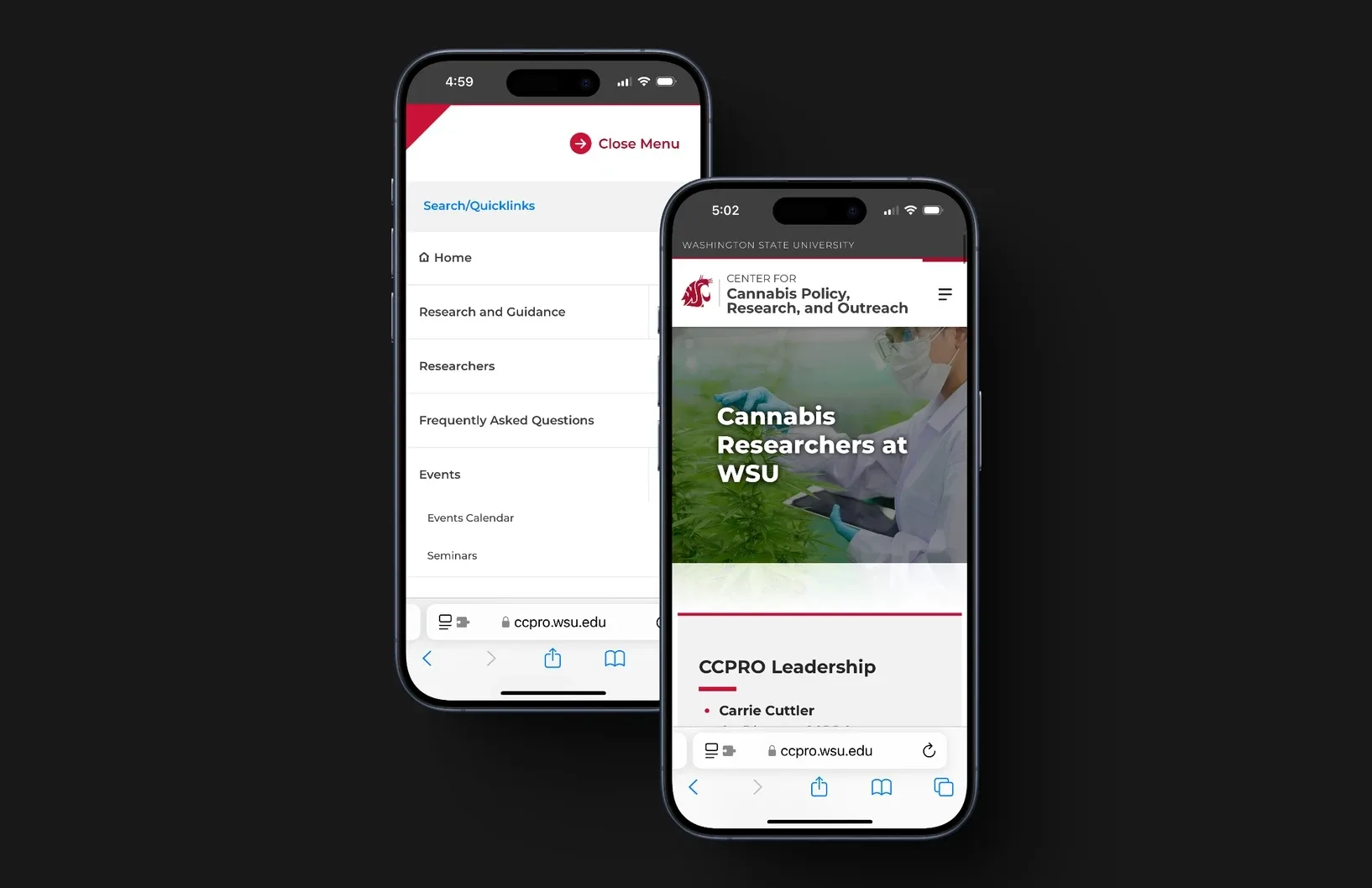
The CCPRO website at Washington State University needed a redesign to handle 30,000+ daily visitors and improve accessibility, usability, and engagement. The old site was cluttered, hard to navigate, and failed WCAG 2.1 standards. My goal as lead UX/UI designer was to create an accessible, efficient platform that supports diverse users and advances the university's cannabis research mission.
§ 02 · Goals
Improve task efficiency for key users
Researchers, students, and donors needed to complete specific tasks fast, like finding studies, registering for events, or accessing resources. The target was a 30%+ reduction in click-depth and time-to-task.Meet WCAG 2.1 accessibility standards
The old site failed basic contrast and layout requirements. We had to meet AA compliance across mobile and desktop without compromising usability or speed.Make research content actually usable
Academic portals often overwhelm users. Our goal was to surface the right information in 3 clicks or less, using faceted search, clean navigation, and mobile-first patterns that hold up under real load.
§ 03 · My role
Led UX/UI for CCPRO site redesign. Improved task flows, mobile UX, and accessibility, cutting research task steps by 62% and boosting mobile use by 40%.
§ 04 · Team
3 UX researchers, 2 developers, 1 PM. I owned UX strategy, wireframes, UI design, and user testing within WSU's strict CMS limits.
§ 05 · PROBLEM
Problem
Washington State University's CCPRO website served researchers, students and public health advocates, but the experience was fragmented and slow.
Key issue: users couldn't quickly access scientific content, register for events, or find resources, especially on mobile.
The mandate was clear: improve task efficiency and accessibility for a diverse audience, without rebuilding the platform from scratch. We had 3 months and had to work within the university's rigid, outdated CMS.
This case study focuses on solving one core challenge: making complex research content easy to find and use for researchers.
§ 06 · Research
Research
To understand where users were getting stuck and what they needed most, I led a focused discovery phase.
Stakeholder Interviews
I interviewed 12 internal stakeholders (researchers, staff, and donors). Top insights:
Researchers needed fast access to peer-reviewed studies
Staff lacked usable tools for managing events
Donors wanted to see research impact at a glance
These shaped measurable goals, like reducing time-to-find-study by 30%.
User Research
I led a team of 3 UX researchers to define key personas based on survey data (n=150) and usability testing (n=20).
Core Personas
| Persona | Role | Key Goals | Pain Points |
|---|---|---|---|
| Dr. Elena Torres | Cannabis researcher | Wants quick access to peer-reviewed, credible studies | Spends too long navigating to specific results |
| Jake Simmons | Undergraduate student | Needs risk prevention materials for a class project | Struggles with dense academic language and poor search |
| Sarah Nguyen | Public health advocate | Looks for upcoming events and community resources | Can't find events easily, poor mobile experience |
Findings:
65% of users couldn't locate specific studies
80% rated the mobile experience "poor" due to layout and responsiveness
Competitive Analysis
I audited 5 peer research portals. Most used:
Faceted search filters
Clean, modular layouts
Minimalist navigation
That set our direction. Clarity and structure mattered more than academic polish.
§ 07 · DEVELOPMENT
Development
With clear user goals, I translated insights into tangible UX improvements.
User Flows
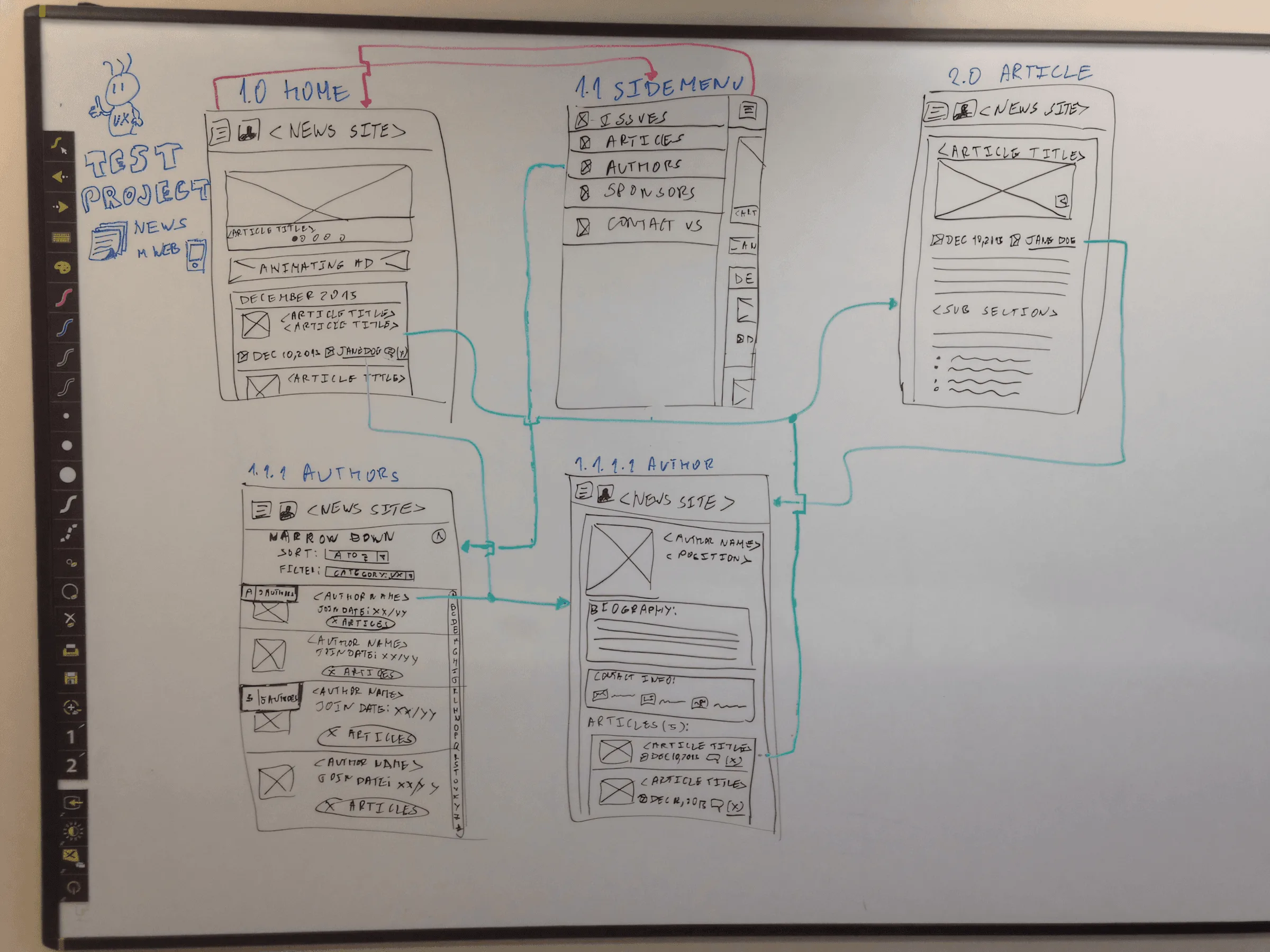
I mapped out flows for each persona.
For Dr. Torres, I prioritized a global search bar with filters by study type and date.
Her path to a relevant PDF was reduced from 8 clicks to 3.
Wireframes
Designed low-fidelity wireframes for 5 core pages (Home, Research Library, Events, About, Contact).
Key decisions:
Modular grid (8px base) for scalable layout
High-contrast palette (#1A3C34 primary) meeting WCAG AA
Font: Open Sans for maximum legibility
Design reviews led to key adjustments, like enlarging CTA buttons by 20% for mobile accessibility.
Prototyping + Testing
Built interactive Figma prototypes with dynamic search and real-time form validation.
Tested with 15 users across personas. Key fix:
- 40% of users missed the "Events" tab, so I moved it to primary nav, reducing task time by 15 seconds.
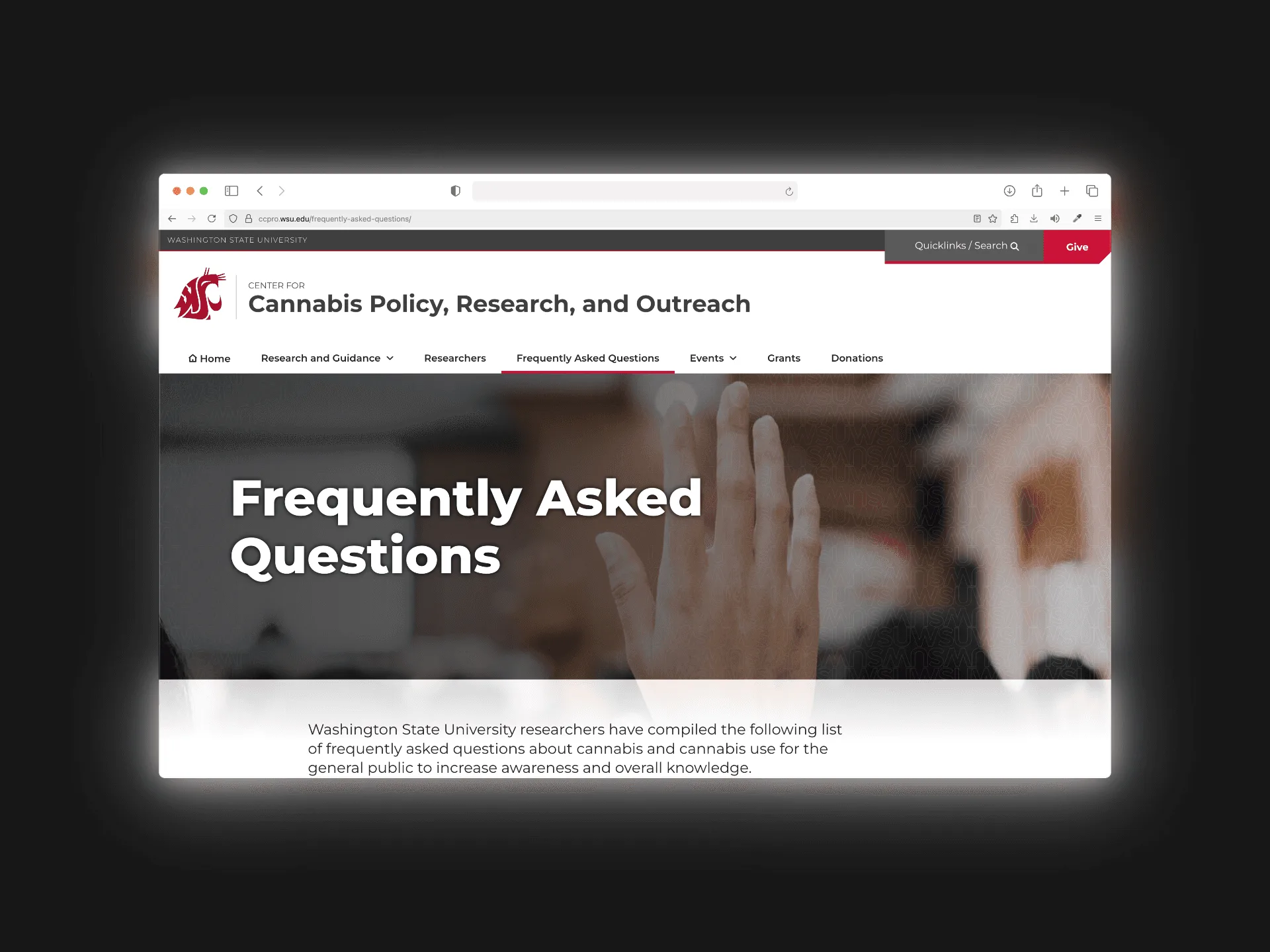
§ 08 · Results
Results
In the first month after launch:
- Daily active users +25%
- Mobile traffic share +40%
- Steps to complete a task −62%
- Missed navigation events −87.5%