The Biological Toll
The Caloric Cost of Cognitive Load
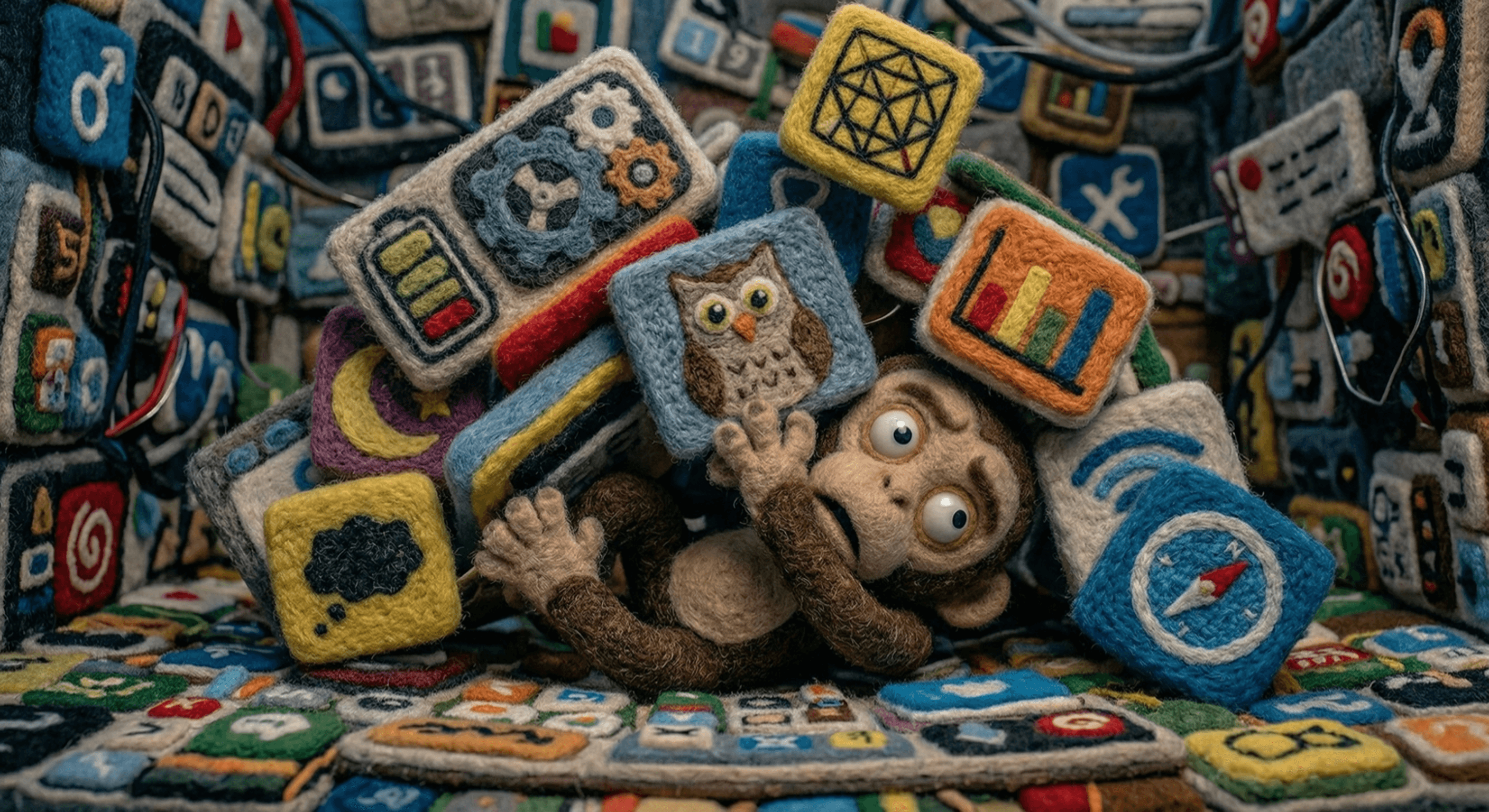
In UX, we talk about cognitive load as a measure of mental friction. In evolutionary biology, cognitive load is measured in calories. The human brain makes up about 2 percent of our body weight but consumes nearly 20 percent of our daily energy. Throughout human history, conserving energy was a matter of survival. When an organism encounters an environment that demands intense, confusing mental processing, the nervous system registers it as an evolutionary threat. It triggers stress. When a person opens a cluttered dashboard with competing visual hierarchies, their brain perceives an immediate caloric drain. The instinctive response is flight. We call it a "high bounce rate," but it is actually a biological self-defense mechanism. Designing simple, intuitive interfaces is not just an aesthetic choice. It is an act of metabolic empathy.
Visual Foraging and the Predator's Eye
Eye-tracking studies consistently show that people do not read interfaces. They scan them. They view the top banner, dart to the bottom left, and sweep across to the right in a classic Z-pattern. Designers often treat this as a quirk of web literacy. Anthropologists see it differently. This scanning behavior is visual foraging. Our peripheral vision evolved to be highly sensitive to movement and contrast to detect threats in the brush. Our foveal vision (the sharp center of our sight) evolved to focus on specific tasks like tool-making or identifying ripe fruit. When someone lands on your app, they are employing ancient foraging strategies. They use their peripheral vision to scan for safety and structure, looking for familiar shapes and margins. Only when they feel oriented do they commit their foveal vision to the content.
If you place crucial, small text in an area outside the natural foraging path, or if you bombard the peripheral vision with moving carousels and pop-ups, you trigger the user's predator-detection alarms. Their visual fixations scatter. They feel anxious without knowing why.
The Physical Disconnect
The Proprioceptive Void of Glass Screens
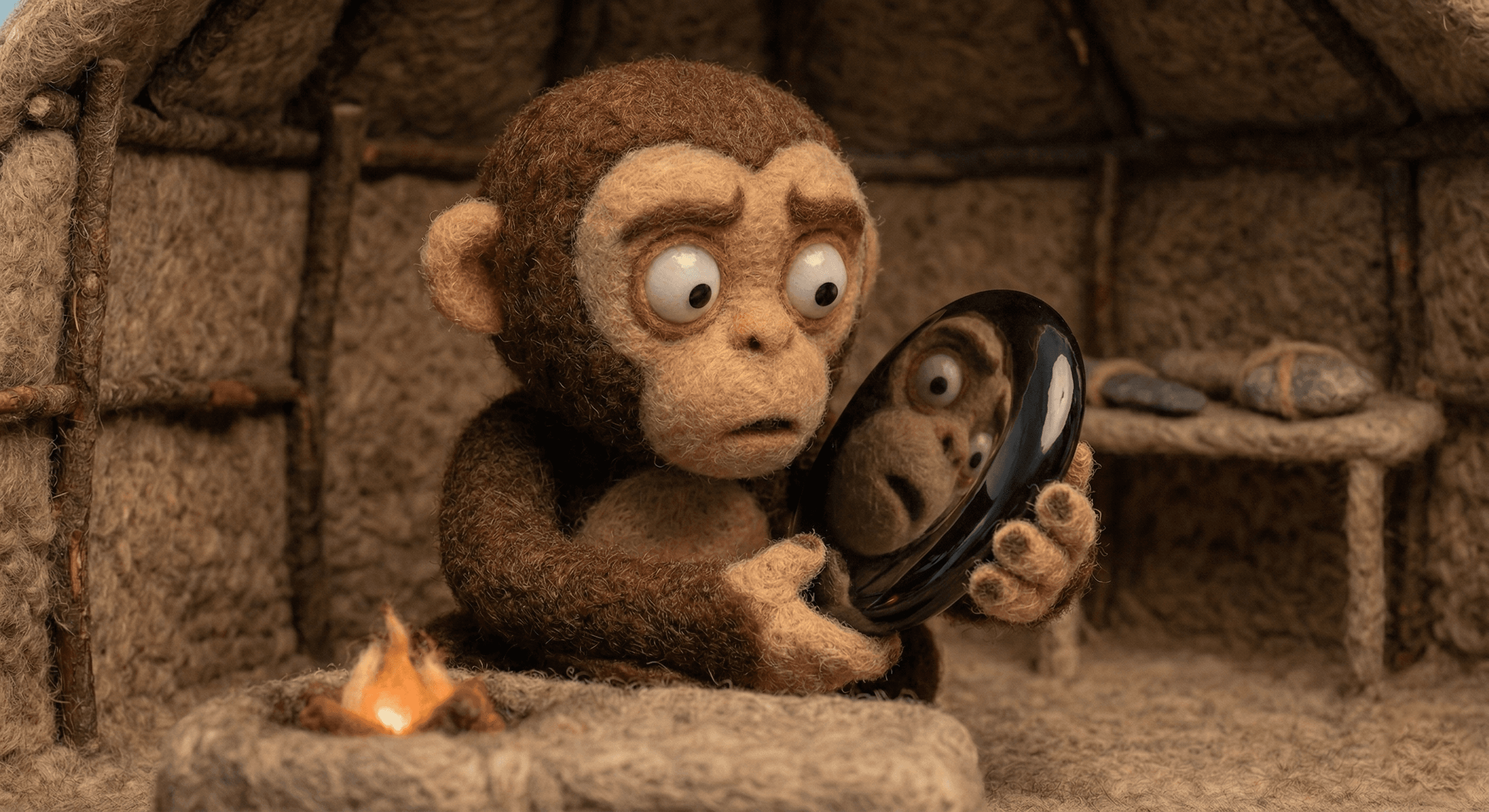
One of the most profound biological disconnects in modern design is the loss of proprioception. Proprioception is our body's ability to sense its own position and movement in space. For millions of years, every tool we interacted with provided rich tactile feedback. A rock has weight. A bowstring has tension. A physical button pushes back. Today, we spend hours tapping dead, flat glass. This creates a subtle, continuous neurological confusion. The brain sends a motor command to the finger to press a button, but the physical environment provides zero mechanical confirmation.
To compensate, the brain has to rely entirely on visual confirmation, forcing the eyes to work overtime to verify every single interaction. This is why micro-interactions and haptics are not just delightful bells and whistles. They are biological necessities. A subtle vibration or a well-timed visual ripple upon a button press bridges the proprioceptive gap. It gives the brain the physical closure it craves, reducing neurological fatigue.
Tribal Dopamine and Digital Thriving
Much has been written about how social media hijacks the dopamine system. Platforms exploit our evolutionary need for tribal validation using variable reward schedules, similar to a slot machine. This behavioral hacking works in the short term, but it ultimately leads to digital burnout and ontological insecurity. The future of product design requires shifting from behavioral manipulation to digital thriving. How do we build spaces that foster actual community rather than metric-driven engagement?
Anthropology provides a framework here. Human societies thrive on shared rituals, clear social norms, and a sense of belonging. Instead of designing infinite scrolls to trap attention, thoughtful designers are looking at how to build tools that facilitate meaningful human-to-human connection. They are creating digital environments that respect circadian rhythms, using dark modes and mindful notification schedules to align with our biological need for rest.
The Environment and the Future
Biophilia and the Architecture of Safety
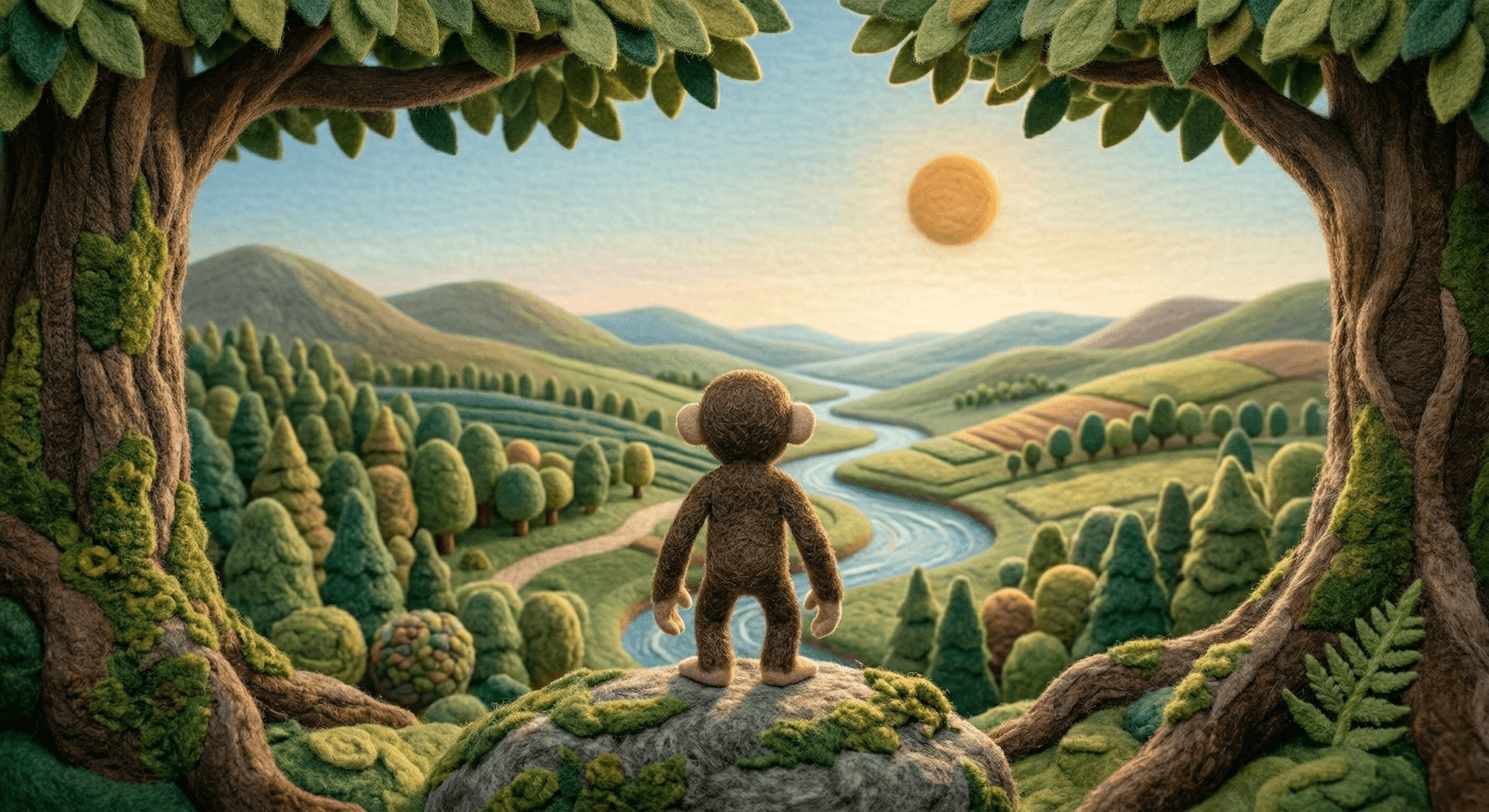
Evolutionary psychology introduces the concept of "prospect and refuge." Humans feel most at ease in environments where they have an unobstructed view of their surroundings (prospect) while having a safe, enclosed space to hide (refuge). Think of a cave overlooking a valley. This concept applies directly to digital spaces. A well-designed interface offers prospect through clear navigation and breadcrumbs. The user always knows where they are and what is on the horizon. It offers refuge through easily accessible undo buttons, clear privacy settings, and a safe home screen to retreat to when lost. Furthermore, our brains have a deep-seated preference for "fractal fluency." We process natural patterns, organic shapes, and a balanced sense of order with incredible ease. When digital products incorporate biophilic design principles through natural color palettes, gentle gradients, and organic layouts, our nervous system visibly relaxes.
The Next Frontier of Design
As interfaces move from flat screens to augmented reality, voice systems, and human-centered AI, the standard UX playbook will no longer be enough. The designers who will shape the future are those who understand that technology is simply the newest layer of human culture. To build exceptional products, look past the pixels. Look at the ancient, complex, and beautiful biological systems processing those pixels. When you design for the human animal, you create experiences that feel less like software and more like an extension of nature itself.

